

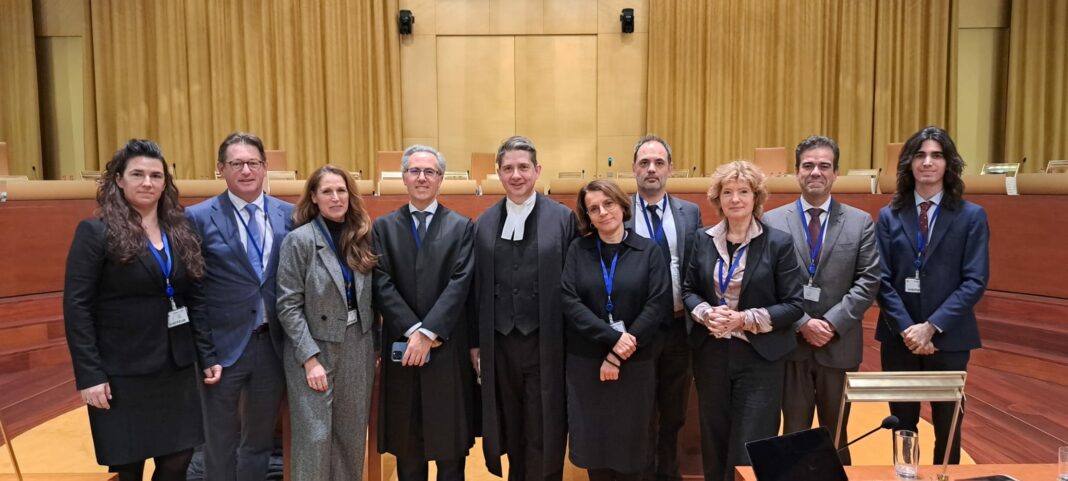

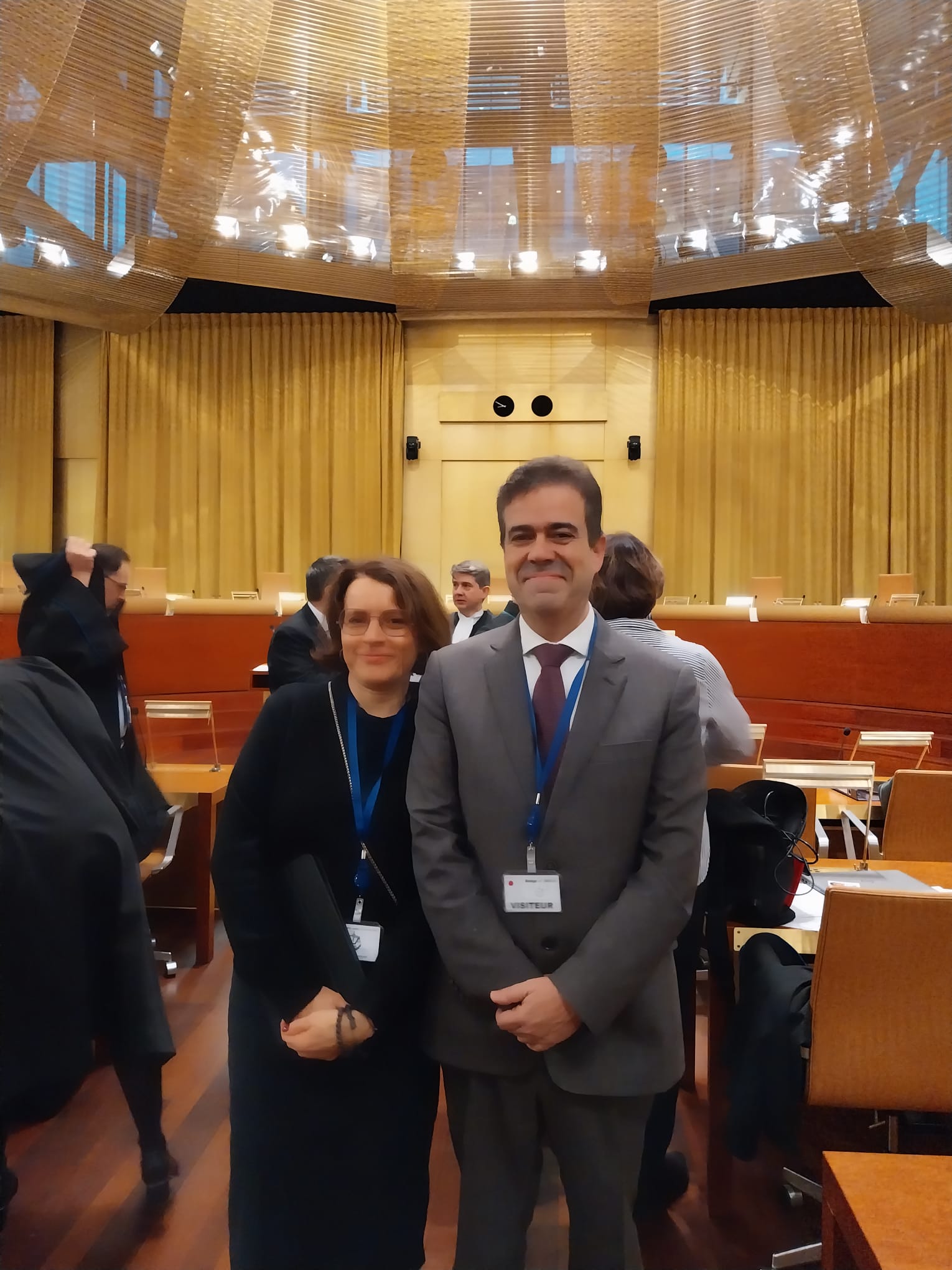
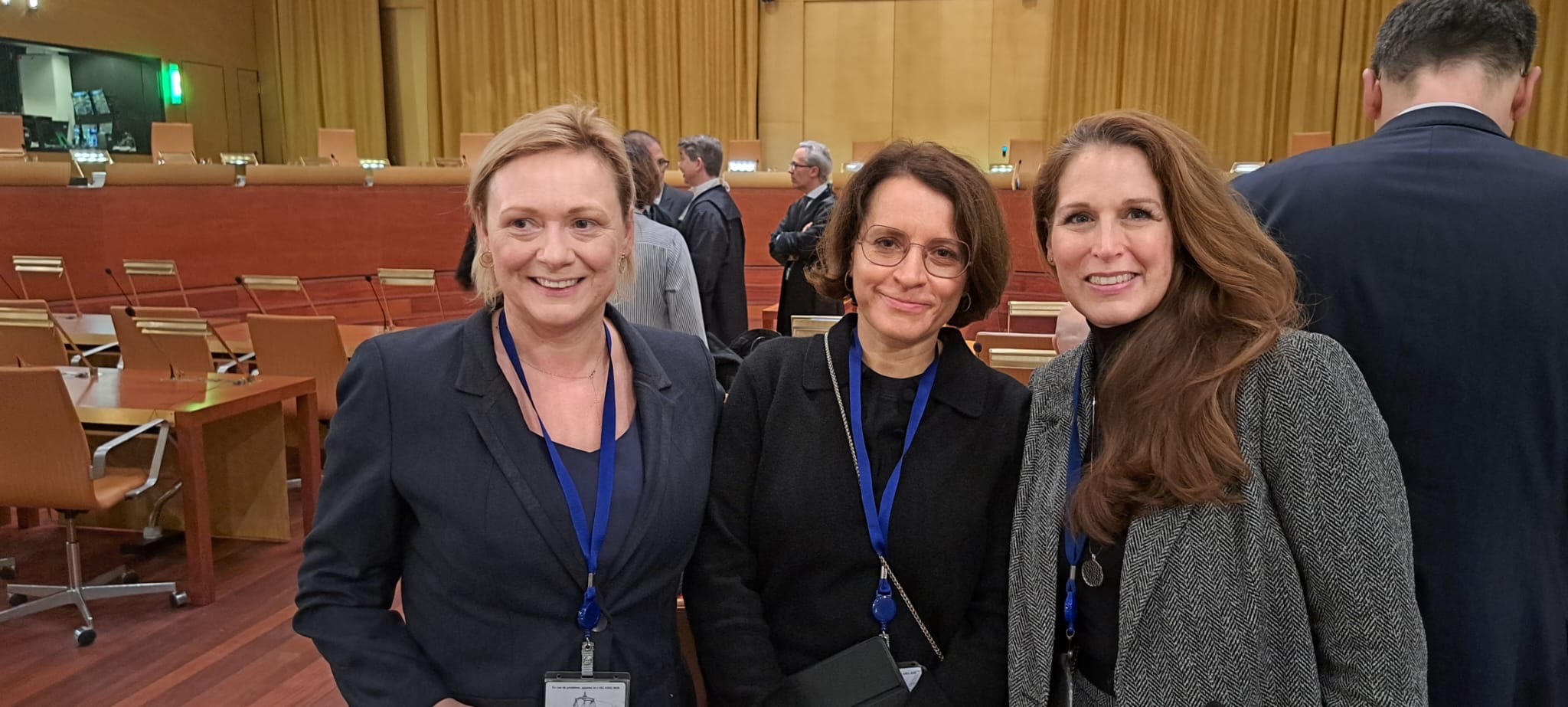
Today, the four European associations and organisations of judges were heard by the Grand Chamber of the Court of Justice of the European Union (C-555/24 P). Their appeal is directed against an order of 4 June 2024 of the Grand Chamber of the General Court dismissing the actions brought by them against the EU Council decision approving the recovery and resilience plan for Poland as inadmissible because of lack of standing and legal interest of the four, even when representing suspended Polish judges (cases T-530/22 to T-533/22).
The four associations of judges launched their lawsuits to contribute to upholding judicial independence in the European Union and to stand by the suspended Polish judges.
The reason for the lawsuits
On 17 June 2022, the Council of the European Union approved the assessment of the plan presented by Poland with regard to the Recovery and Resilience Facility. The Council decision established certain milestones that Poland had to achieve in order to be granted funds. One of the milestones required Poland to establish a review procedure in respect of decisions of the Disciplinary Chamber of the Supreme Court concerning judges suspended or otherwise disciplined on grounds contrary to EU law.
EAJ, Medel, AEAJ and Judges for Judges argue that this milestone is incompatible with EU law as the Court of Justice already decided that unlawfully suspended judges had to be immediately restored in their functions without any type of review.
The hearing of 2 December 2025
The appeal against the order of 4 June 2024 of the General Court is limited to our admissibility. We argue in particular that the General Court incorrectly applied the admissibility requirements as they result from the case-law. We consider that the Polish judges and the European associations and organisations of judges are affected by decisions of the Disciplinary Chamber are “directly concerned” by the introduction of a review procedure, and this irrespective of its specific features. Any review procedure would have an adverse effect on the situation of the Polish judges now that they should in principle have been reinstated without any review procedure.
We also argue that it is time for EU procedural law on standing and legal interest to be developed further since it was first introduced in the seminal Plaumann case (1963).
The most important arguments for this further development are:
- that the European Union is not just about economic cooperation anymore and has also intensively developed in the field of justice, fundamental rights and values of the Rule of Law, including independence of judges in the European Union;
- that there are serious and persistent challenges to the Rule of Law in Poland and that there is no effective judicial protection at the national Polish level for the interests that the four organisations want to protect in these lawsuits
Furthermore, we feel that the order of the General Court conceives judicial independence and the Rule of law as a matter exclusively reserved to European institutions, especially the European Commission and the Council. Such a conception, which precludes national judges and the European civil society, is not without risks for the (Rule of Law within the) Union as a whole.
The press will be informed in due time if any new developments occur in these lawsuits.
Background
The four main European organisations of judges are the Association of European Administrative Judges (AEAJ), the European Association of Judges (EAJ, a regional branch of the International Association of Judges – IAJ), Rechters voor Rechters (Judges for Judges), and Magistrats Européens pour la Démocratie et les Libertés (MEDEL). They are represented by Carsten Zatschler SC and Emily Egan McGrath BL, Senior Counsel, and by Prof. Daniel Sarmiento, lawyer at EUNITY, assisted by Anne Bateman, Solicitor of Philip Lee LLP, Dublin. The support provided by Maeve Delargy and The Good Lobby Profs is gratefully acknowledged.
2 December 2025

Press release (.pdf)