


Migrants and migration policies: is Europe still based on the indivisible, universal values of human dignity, equality and solidarity?
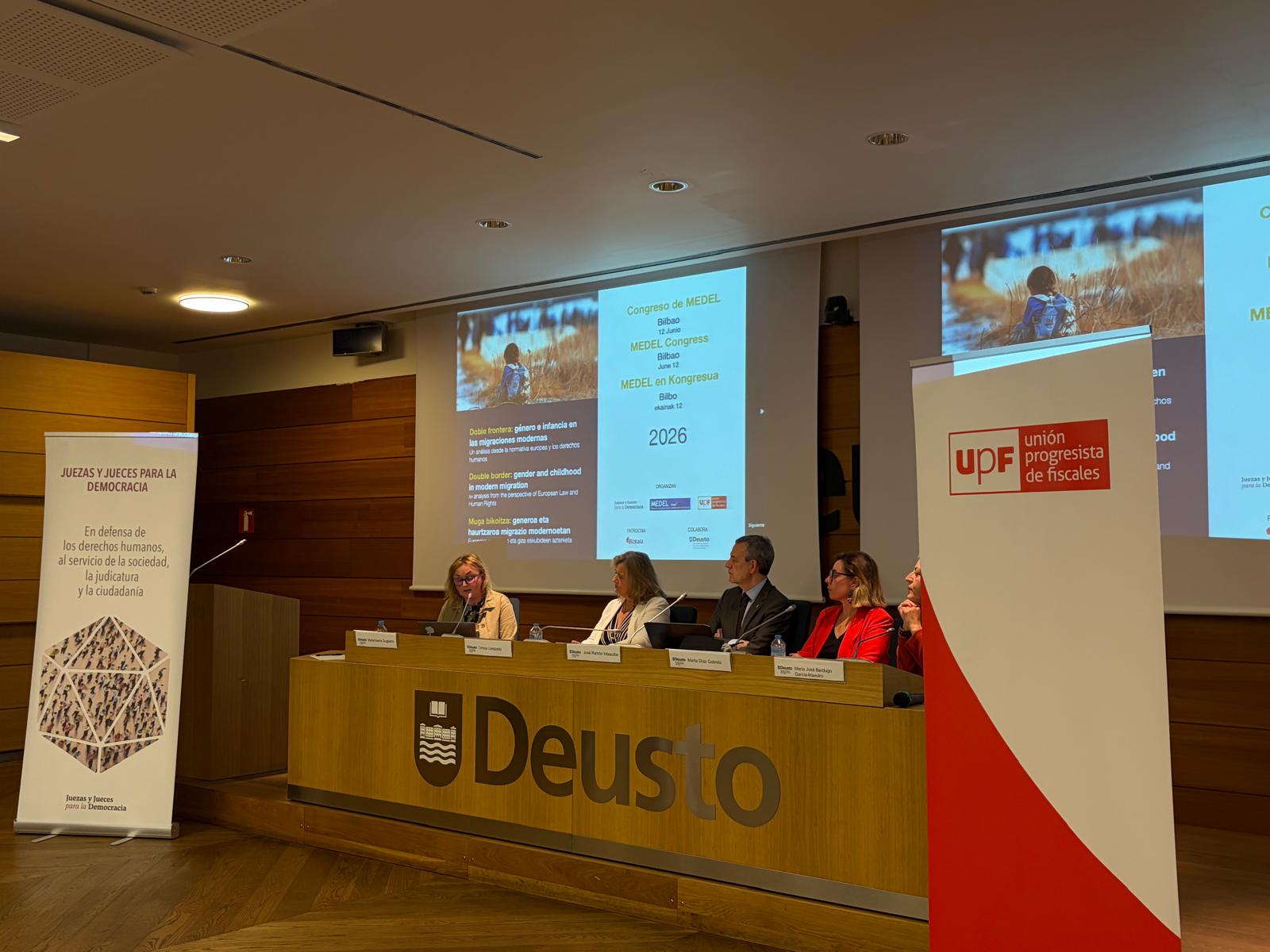
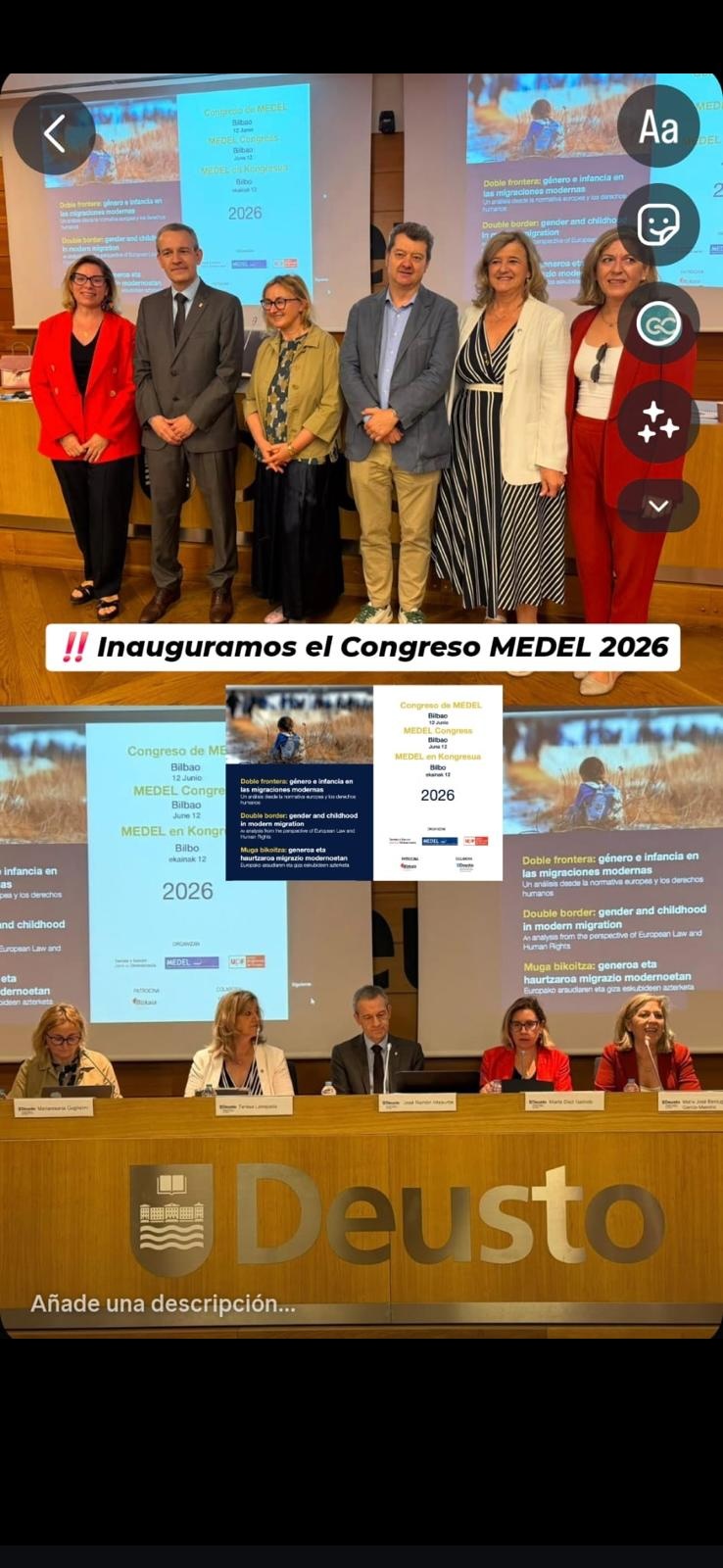
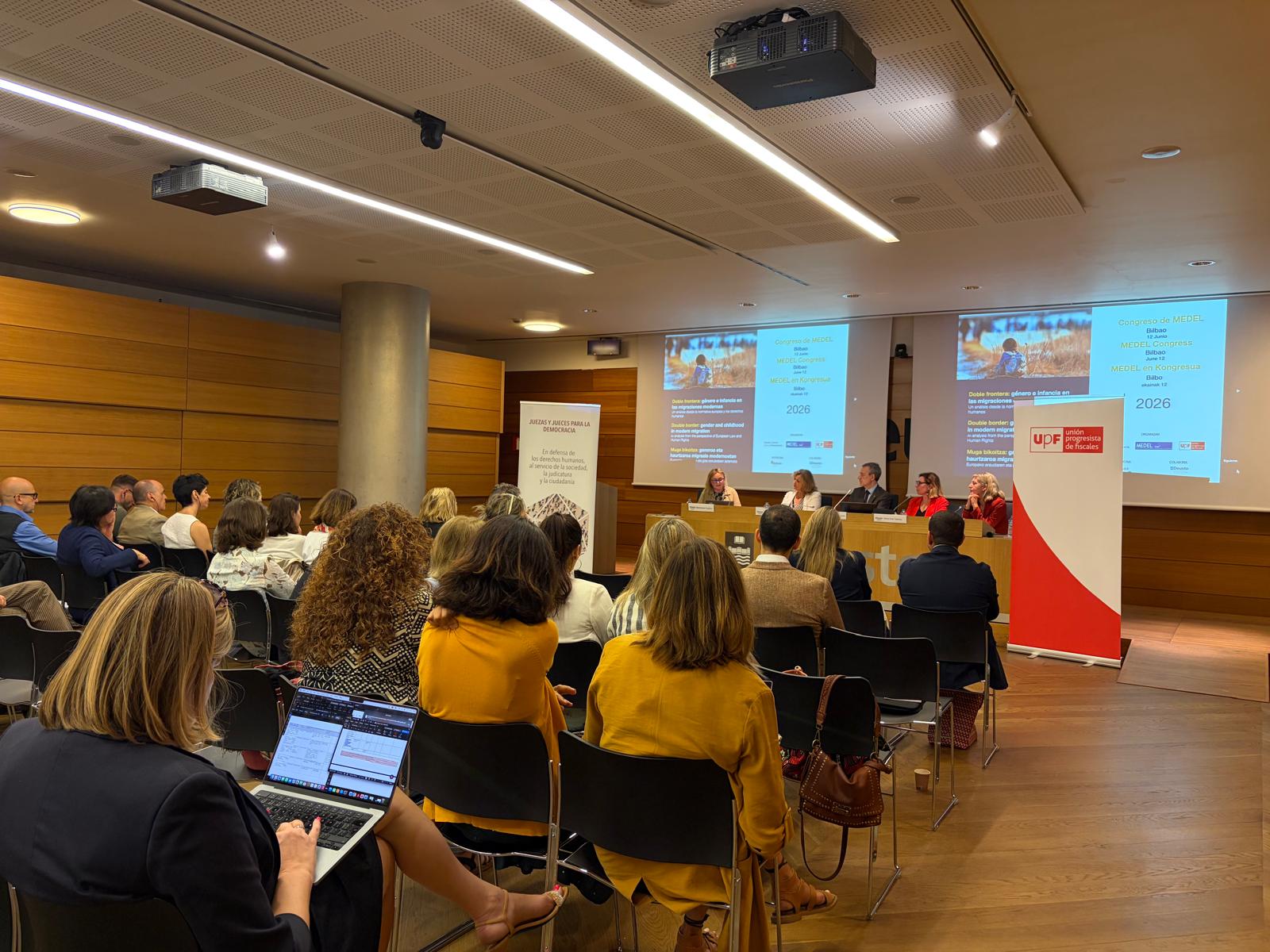
Opening speech by the President of MEDEL, Mariarosaria Guglielmi, at the International Conference “Double Border: Gender and Childhood in Modern Migrations. European Regulations and Human Rights”, University of Deusto – Bilbao, June 12,2026.
On behalf of MEDEL, I would like to thank the University of Deusto and our Spanish associations for co-organising today’s conference and for their hospitality. I welcome our distinguished speakers and thank them for joining us to share their views on key issues concerning the role of judges as impartial guardians of fundamental rights and the very future of the system established to protect them in the wake of the tragedies of the Second World War.
Last June, at the Palace of Europe in Strasbourg, we celebrated MEDEL’s 40th anniversary and the visionary project that inspired our founding fathers: when Europe was still divided by the Berlin Wall, MEDEL looked forward to the promotion of a European integration based on Rule of law and human rights, including among its statutory goals the proclamation and defence of the rights of minorities and differences, in particular the rights of immigrants and the most disadvantaged, in a perspective of social emancipation of the most vulnerable.
MEDEL has always considered European migration policies as a litmus test for the principles enshrined in our fundamental Charters.
The EU Charter of Fundamental Rights declares that the Union is founded “on the indivisible, universal values of human dignity, freedom, equality and solidarity”. In this Charter we stated that the EU is committed to ensuring the enjoyment of fundamental rights which entails “responsibilities and duties with regard to other persons, to the human community and to future generations”.
What remains of these solemn promises today?
According to the International Organization for Migration (IOM)’s Missing Migrants Project[1], which has been collecting information about dead and missing migrants since 2014, the Central Mediterranean Sea still represents the deadliest migration route in the world; the first quarter of 2026 recorded the highest death toll in over a decade for migrants trying to cross the central Mediterranean: around 765 people have died this year, over 460 more than during the same period in 2025. Such impressive figures cast a shadow over the very survival of Europe as a community based on universal values defined as its raison d’être.
Today marks the entry into force of the EU rules set out in the New Pact on Migration and Asylum adopted in 2024, covering border controls, asylum applications from migrants seeking protection in Europe, fingerprinting, transfers between EU countries and returns.
Celebrated in official speeches as an historic step, marketed as a solution aimed at promoting solidarity among Member States and streamlining border procedures, the new Pact represents the development and further enhancement of theFortress Europe’s policies, that address the issue of immigration solely in terms of “security and public order”.
Over the years, “security and public order” have shaped national policies that have made extensive use of ‘legal criminalisation’ techniques linked to ‘illegal entry’ or ‘illegal stay’ of migrants; policies which have led to the criminalisation of support for migrants and humanitarian action – a “global phenomenon” which is now deeply rooted throughout the Europe and EU Member States; policies that have led to the adoption of regulations that hinder NGOs search and rescue operations at sea and to “legal” violence for the purpose of controlling the EU’s internal and external borders; policies of so-called “externalisation” of border management which, through memoranda of understanding and informal agreements with countries where democracy, rule of law and minimum standards of human rights protection are non-existent (suffice it to mention the Italy – Lybia memorandum of understanding and more recently, in 2023, the agreement between EU and Tunisia), have entrusted these countries with the management of migration flows, while redefining EU aid policies on the basis of the geographical location of third countries and their capacity to stem the flow of migrants rather than on the priorities of international development cooperation and humanitarian aid (“the reduction and, in the long term, the eradication of poverty”, as envisaged in art. 208 of the Treaty on the Functioning of the European Union).
Civil society organizations and experts sounded the alarm about the detrimental impact of the New pact on the rights of migrants and the key retrogressive measures -that threaten to reverse progress on non-refoulement and other fundamental guarantees- such as: the pre-entry screening procedure and automatic detention of migrants and asylum seekers, including minors, a procedure that perpetuates a deeply problematic hotspot approach to the management of irregular arrivals to Greece and Italy introduced in 2015; the legal fiction of “non-entry”, denying the arrival of individuals “not authorised to enter the national territory” of an EU Member State regardless of their physical presence; accelerated, substandard procedures to assess asylum claims rather than full and fair assessments; the expansion of the “safe third country” concept, ultimately shifting responsibility for asylum seekers to third states and heightening the risk of refoulement; the new “instrumentalization of migrants” paradigm: a vaguely grounded concept which – assuming the “instrumental use” by “hostile” third Countries actors with the aim of destabilising the EU -is essentially a detailed derogation regime, to be deployed in situations of crisis, such as large-scale arrivals from a third country, which is intended to allow Member States to deviate from standard asylum procedures. It is exactly by invoking the risk of the so-called migrants “instrumentalization” practices by Belarus, that countries such as Poland, Latvia, and Lithuania adopted wide-ranging, long-term domestic legislation to (forcedly) return migrants to a third Country without safe repatriation procedures and without any individual evaluation of their asylum applications[2].
Migration, as the Italian legal philosopher Luigi Ferrajoli puts it, is the defining feature of a “new world order”; it is a request for and a vehicle of equality. But it is no longer merely populist rhetoric that has turned it into a threat to our security. We are facing what has been described as an emerging pattern of decline in established liberal-democratic constitutional orders in their commitment to human rights. We are facing a systemic attack on the supranational judicial architecture that should act as guarantor of the highest level of protection of fundamental rights, based on European and domestic Courts and relying on the role that national judges play in applying supranational sources.
The open letter published on 22 May last year signed by nine countries (EU and CoE members) calling for a shift in the Strasbourg Court’s interpretative approach in the field of migration and in cases concerning ‘irregular migrants’ (wrong people, said the letter), represented a worrying turn, as the Commissioner for Human Rights of the Council of Europe Michael O’Flaherty said: a letter based on the narrative of a loss of control of borders, putting a focus on criminality and grossly overspeaking its incidence within migrant communities with almost no reference to refugees fleeing persecution; a letter that contains baseless claims such as that according to which the Strasbourg Court would make the protection of our societies more difficult, disregarding how states can instead pursue legitimate goals like securing borders without backtracking on respect for human rights[3].
A letter that behind the cautious tone, disguised an interference with the independence of the Court.
The declaration adopted a month ago in Chisinau by the Committee of Ministers of the Council of Europe (CoE) has crossed another line that its diplomatic phrasing cannot neutralise[4]. In its preamble the declaration asserts that “ inherent in the whole of the Convention on Human Rights is a search for a fair balance between the demands of the general interest of the community and the requirements of the protection of the individual’s fundamental rights” . This incipit clearly sets out the perspective of the Declaration, that is that of the states rather than that of individual rights: it ‘overlooks’ the fact that the Convention protects these rights, and not the general interest, just as it overlooks the fact that, with regard to fundamental rights, no balancing of interests can take place when we are referring to the prohibition of torture (Article 3) which, amongst other provisions, is absolute.
This declaration aims to shape what the Convention guarantees mean, inspired by States whose primary interest is in narrowing the Convention’s reach in migration matters[5]. States claiming that the Court’s case law lacks clarity on thresholds for ill-treatment in expulsion and extradition cases, or that family rights are interpreted too broadly to halt removals. As Commissioner O’Flaherty said after Chisinau, the false polarity between the public interest and individual rights is a thinly veiled attempt to compel the Court to lower standards and undermine absolute protection. ”Human rights are not a reward for good behaviour, nor are they a zero-sum game in which one group’s security requires another’s deprivation. They are held co-equally by everyone, by virtue of our shared humanity alone”[6].
Our shared humanity, equality in dignity and rights: these are the values at stake when we talk about migration policies; these are the values to which we call on Europe and EU to remain faithful.
Thank you very much for your attention. I wish you all a good conference.
[1] https://missingmigrants.iom.int
[2] A. Ancite-Jepifánova, ‘Migrant Instrumentalisation: Facts and Fictions’, Verfassungsblog, Sep- tember 21, 2023 (https://verfassungsblog.de/migrant-instrumentalisation-facts-and-fictions/).
[3] https://www.coe.int/en/web/portal/-/attacks-on-the-human-rights-of-migrants-put-all-our-rights-at-risk
[4] https://verfassungsblog.de/crossing-a-line-in-plain-sight/
[5] https://verfassungsblog.de/crossing-a-line-in-plain-sight/
[6] https://www.coe.int/en/web/commissioner/-/«-les-etats-européens-doivent-affirmer-qu-un-être-humain-ne-se-verra-jamais-attribuer-un-statut-inférieur-au-motif-qu-il-a-migré-»
Opening speech by Mariarosaria Guglielmi (.pdf)
————————– (IT)
Migranti e politiche migratorie: l’Europa si fonda ancora sui valori indivisibili e universali della dignità umana, dell’uguaglianza e della solidarietà?
Discorso di apertura della presidente di MEDEL, Mariarosaria Guglielmi, alla Conferenza internazionale “Doppio confine: genere e infanzia nelle migrazioni moderne. Normative europee e diritti umani”, Università di Deusto – Bilbao, 12 giugno 2026.
A nome di MEDEL, desidero ringraziare l’Università di Deusto e le nostre associazioni spagnole per aver co-organizzato la conferenza odierna e per la loro ospitalità. Ringrazio i nostri illustri relatori per essersi uniti a noi per condividere le loro opinioni su questioni fondamentali riguardanti il ruolo dei giudici come custodi imparziali dei diritti fondamentali e il futuro stesso del sistema istituito per proteggere tali diritti dopo le tragedie della seconda guerra mondiale.
Lo scorso anno a giugno, al Palazzo dell’Europa a Strasburgo, abbiamo celebrato il 40° anniversario di MEDEL e il progetto visionario che ha ispirato i nostri padri fondatori: quando l’Europa era ancora divisa dal Muro di Berlino, MEDEL guardava avanti verso la promozione di un’integrazione europea fondata sullo Stato di diritto e sui diritti umani, includendo tra i propri obiettivi statutari la proclamazione e la difesa dei diritti delle minoranze e delle diversità, in particolare i diritti degli immigrati e delle persone più svantaggiate, in una prospettiva di emancipazione sociale dei più vulnerabili.
MEDEL ha sempre considerato le politiche migratorie europee come una cartina di tornasole dei principi sanciti nelle nostre Carte fondamentali.
La Carta dei diritti fondamentali dell’Unione europea dichiara che l’Unione si fonda «sui valori indivisibili e universali della dignità umana, della libertà, dell’uguaglianza e della solidarietà». In questa Carta si afferma che l’UE si impegna a garantire il godimento dei diritti fondamentali, il che comporta «responsabilità e doveri nei confronti delle altre persone, della comunità umana e delle generazioni future».
Cosa resta oggi di queste solenni promesse?
Secondo il progetto “Missing Migrants” dell’Organizzazione Internazionale per le Migrazioni (OIM)[1] , che dal 2014 raccoglie informazioni sui migranti morti e dispersi, il Mediterraneo centrale rappresenta ancora oggi la rotta migratoria più letale al mondo; nel primo trimestre del 2026 si è registrato il numero più alto di vittime in oltre un decennio tra i migranti che tentavano di attraversare il Mediterraneo centrale: circa 765 persone sono morte quest’anno, oltre 460 in più rispetto allo stesso periodo del 2025. Cifre così impressionanti gettano un’ombra sulla stessa sopravvivenza dell’Europa come comunità fondata sui valori universali definiti come la sua ragion d’essere.
Oggi entra in vigore la normativa dell’UE prevista dal Nuovo Patto sulla migrazione e l’asilo adottato nel 2024, che riguarda i controlli alle frontiere, le domande di asilo presentate dai migranti in cerca di protezione in Europa, le procedure di screening, i trasferimenti tra paesi dell’UE e i rimpatri.
Celebrato nei discorsi ufficiali come un passo storico, presentato come una soluzione volta a promuovere la solidarietà tra gli Stati membri e a snellire le procedure di frontiera, il nuovo Patto rappresenta lo sviluppo e l’ulteriore rafforzamento delle politiche della «Fortezza Europa», che affrontano la questione dell’immigrazione esclusivamente in termini di “sicurezza e ordine pubblico”.
Nel corso degli anni, la “sicurezza e l’ordine pubblico” hanno plasmato politiche nazionali che hanno fatto ampio ricorso a tecniche di “criminalizzazione legale” legate all’“ingresso illegale” o al “soggiorno illegale” dei migranti; politiche che hanno portato alla criminalizzazione del sostegno ai migranti e dell’azione umanitaria, un fenomeno globale ormai profondamente radicato in tutta Europa e negli Stati membri dell’UE; politiche che hanno portato all’adozione di normative che ostacolano le operazioni di ricerca e soccorso in mare condotte dalle ONG e alla violenza “legale” finalizzata al controllo delle frontiere interne ed esterne dell’UE; politiche di cosiddetta “esternalizzazione” della gestione delle frontiere che- attraverso memorandum d’intesa e accordi informali con paesi in cui la democrazia, lo Stato di diritto e gli standard minimi di tutela dei diritti umani sono inesistenti (basti citare il memorandum d’intesa tra Italia e Libia e, più recentemente, nel 2023, l’accordo tra l’UE e la Tunisia)- hanno affidato a questi paesi la gestione dei flussi migratori, ridefinendo al contempo le politiche di aiuto dell’UE in base alla posizione geografica dei paesi terzi e alla loro capacità di arginare il flusso di migranti piuttosto che alle priorità della cooperazione internazionale allo sviluppo e degli aiuti umanitari («la riduzione e, a lungo termine, l’eliminazione della povertà», come previsto dall’art. 208 del Trattato sul funzionamento dell’Unione europea).
Le organizzazioni della società civile e gli esperti hanno lanciato l’allarme riguardo all’impatto negativo del Nuovo Patto sui diritti dei migranti e alle principali misure regressive – che minacciano di vanificare i progressi compiuti in materia di non respingimento e altre garanzie fondamentali – quali: la procedura di screening pre-ingresso e la detenzione automatica dei migranti e dei richiedenti asilo, compresi i minori, una procedura che perpetua l’approccio “hotspot” profondamente problematico alla gestione degli arrivi irregolari in Grecia e in Italia, introdotto nel 2015; la finzione giuridica del “non ingresso”, che nega l’arrivo di persone “non autorizzate ad accedere al territorio nazionale” di uno Stato membro dell’UE a prescindere dalla loro presenza fisica; procedure accelerate e al di sotto degli standard per la valutazione delle domande di asilo, anziché valutazioni complete ed eque; l’estensione del concetto di “paese terzo sicuro” che in ultima analisi trasferisce la responsabilità dei richiedenti asilo a Stati terzi e accresce il rischio di respingimento; il nuovo paradigma della strumentalizzazione dei migranti: un concetto fondato su una base del tutto vaga, che – ipotizzando l’uso strumentale da parte di attori di paesi terzi ostili con l’obiettivo di destabilizzare l’UE – costituisce essenzialmente un regime di deroga dettagliato, da applicare in situazioni di crisi, quali gli arrivi su larga scala da un paese terzo, volto a consentire agli Stati membri di discostarsi dalle procedure standard in materia di asilo. È proprio invocando il rischio delle cosiddette pratiche di strumentalizzazione dei migranti da parte della Bielorussia che paesi come Polonia, Lettonia e Lituania hanno adottato una legislazione nazionale di ampia portata e a lungo termine per rinviare (con la forza) i migranti verso un paese terzo senza procedure di rimpatrio sicure e senza alcuna valutazione individuale delle loro domande di asilo[2] .
La migrazione, come afferma il filosofo del diritto italiano Luigi Ferrajoli, è costitutiva di un «nuovo ordine mondiale», come richiesta e veicolo di uguaglianza. Ma non è più solo la retorica populista ad averla trasformata in una minaccia alla nostra sicurezza. Ci troviamo di fronte a quello che è stato descritto come un modello emergente di declino degli ordinamenti costituzionali liberaldemocratici consolidati nel loro impegno a favore dei diritti umani. Ci troviamo di fronte a un attacco sistemico all’architettura giudiziaria sovranazionale che dovrebbe fungere da garante del massimo livello di tutela dei diritti fondamentali, basata sulle Corti europee e nazionali e che si avvale del ruolo svolto dai giudici nazionali nell’applicazione delle fonti sovranazionali.
La lettera aperta pubblicata il 22 maggio dello scorso anno, firmata da nove paesi (membri dell’UE e del Consiglio d’Europa), che chiedeva un cambiamento nell’approccio interpretativo della Corte di Strasburgo in materia di migrazione e nei casi riguardanti i “migranti irregolari” (“persone sbagliate”, secondo la lettera), ha rappresentato una svolta preoccupante, come ha affermato il Commissario per i diritti umani del Consiglio d’Europa Michael O’Flaherty: una lettera basata sulla narrativa di una perdita di controllo delle frontiere, che pone l’accento sulla criminalità e ne esagera grossolanamente l’incidenza all’interno delle comunità di migranti senza quasi alcun riferimento ai rifugiati in fuga dalle persecuzioni; una lettera che contiene affermazioni infondate, come quella secondo cui la Corte di Strasburgo renderebbe più difficile la protezione delle nostre società, trascurando il fatto che gli Stati possono invece perseguire obiettivi legittimi come la sicurezza delle frontiere senza venir meno al rispetto dei diritti umani[3] .
Una lettera che, dietro il tono cauto, maschera un’ingerenza nell’indipendenza della Corte.
La dichiarazione adottata un mese fa a Chisinau dal Comitato dei Ministri del Consiglio d’Europa ha superato un altro limite che la sua formulazione diplomatica non riesce a neutralizzare[4]. Nel suo preambolo la dichiarazione afferma che «alla base dell’intera Convenzione sui diritti dell’uomo vi è la ricerca di un giusto equilibrio tra le esigenze dell’interesse generale della comunità e i requisiti della tutela dei diritti fondamentali dell’individuo». Questo incipit definisce chiaramente la prospettiva della dichiarazione, ovvero quella degli Stati piuttosto che quella dei diritti individuali: essa “trascura” il fatto che la Convenzione tutela proprio questi diritti, e non l’interesse generale, così come trascura il fatto che, in materia di diritti fondamentali, non possa aver luogo alcun bilanciamento di interessi quando ci si riferisce al divieto di tortura (articolo 3) che, tra le altre disposizioni, è assoluto.
La presente dichiarazione mira a definire il significato delle garanzie previste dalla Convenzione, ispirandosi agli Stati il cui interesse primario è quello di restringere l’ambito di applicazione della Convenzione in materia di migrazione[5] . Si tratta di Stati che sostengono che la giurisprudenza della Corte manchi di chiarezza riguardo alle soglie di maltrattamento nei casi di espulsione ed estradizione, oppure che i diritti legati alla vita familiare siano interpretati in modo troppo ampio per impedire i rimpatri. Come ha affermato il commissario O’Flaherty dopo Chisinau, la falsa contrapposizione tra interesse pubblico e diritti individuali è un tentativo malcelato di voler costringere la Corte ad abbassare gli standard e a minare la protezione assoluta dei diritti.
«I diritti umani non sono una ricompensa per il buon comportamento, né un gioco a somma zero in cui la sicurezza di un gruppo richieda la privazione di un altro: essi sono detenuti in egual misura da tutti, in virtù della nostra comune umanità»[6].
La nostra comune umanità, l’uguaglianza nella dignità e nei diritti: questi sono i valori in gioco quando parliamo di politiche migratorie; questi sono i valori ai quali chiediamo all’Europa e all’UE di rimanere fedeli.
Grazie mille per la vostra attenzione. Auguro a tutti voi una proficua conferenza.
[1] https://missingmigrants.iom.int
[2] A. Ancite-Jepifánova, «Strumentalizzazione dei migranti: fatti e finzione», Verfassungsblog, 21 settembre 2023 (https://verfassungsblog.de/migrant-instrumentalisation-facts-and-fictions/).
[3] https://www.coe.int/en/web/portal/-/attacks-on-the-human-rights-of-migrants-put-all-our-rights-at-risk
[4] https://verfassungsblog.de/crossing-a-line-in-plain-sight/
[5] https://verfassungsblog.de/crossing-a-line-in-plain-sight/
[6] https://www.coe.int/en/web/commissioner/-/«-gli-Stati-europei-devono-affermare-che-a-un-essere-umano-non-verrà-mai-attribuito-uno-status-inferiore-per-il-semplice-motivo-di-aver-emigrato-»
Intervento di apertura di Mariarosaria Guglielmi (.pdf)